Introduction (Background and Aim)
1. How can a digital service strengthen real-world connection and broaden the circle of empathy?
COCOHELI faces a very real challenge — getting lost in the mountains — yet most of the user experience is completed digitally, through the web and email. There were occasional touchpoints with users at events, but to take the service to its next stage of evolution and growth, a more solid foundation of user understanding and empathy was needed.
At the same time, as the organization grew, more employees with limited outdoor experience joined teams across the company, including back-office functions. We sensed that understanding of the operating field was gradually thinning across the organization. Building a strong team that genuinely understood the business and could move in the same direction had become an essential challenge in itself.
Against this backdrop, we set the central theme as “how to strengthen real-world connection” and pushed the work forward — not as one-off research or events, but positioned as a long-term project to nurture a community where empathy spreads and a circle of safety grows both inside and outside the company.
Methods
2. A staged approach to bridging the real-world field and the service
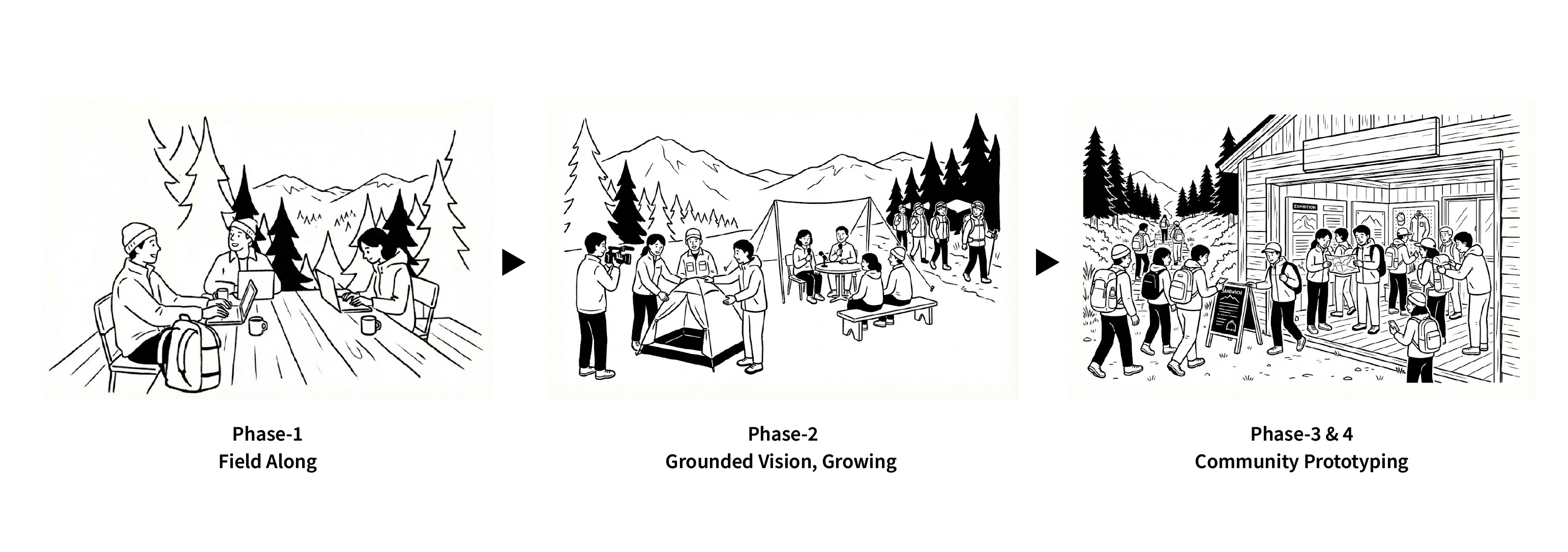
To understand the felt experience and behaviors of users that digital alone cannot capture, we engaged the real-world field in stages. It was a hands-on, practice-based process: spending time in the mountains, meeting people, and accumulating what we learned along the way. The work was organized into the following four phases.
- Phase 1: Field Along Start by working from the mountain side
- Phase 2: Grounded Vision, Growing Vision built from on-site practice
- Phase 3: Community Prototyping Standing up a community hub
- Phase 4: Co-Creation Expansion Growth as a place for co-creation
An approach grounded in community design and service design
Our compass came from the perspectives of community design and service design. We saw the spread of a membership-based service as a kind of community, and through both soft and hardware design, we shaped places where users, locals, and staff could naturally meet, exchange words, and build relationships over time.
Beyond that — ethnography-style field research, vision building, embedding into the organization, and so on. For example, vision building often relies on backcasting, but here we leaned forecasting, prioritizing connection in the real-world field. We constantly asked whether each move helped a startup grow and whether it could be put into practice without becoming a paper plan, adapting service-design methods we had used before to fit this context.
Community design — supporting the people involved in a community, through design, to build their own capacity to solve problems. To connect people with one another, it designs not only hardware like facilities and spaces but also soft activities like workshops and events — a form of social practice that shapes relationships in society. — IDEAS FOR GOOD
Service design applies design thinking to services and focuses not just on talk but on doing. Service design is valuable because it can shift the awareness of employees and managers to be genuinely user-centered. — THIS IS SERVICE DESIGN DOING
Results
3. Community formed through accumulated field practice
Phase 1: Field Along — Start by working from the mountain side
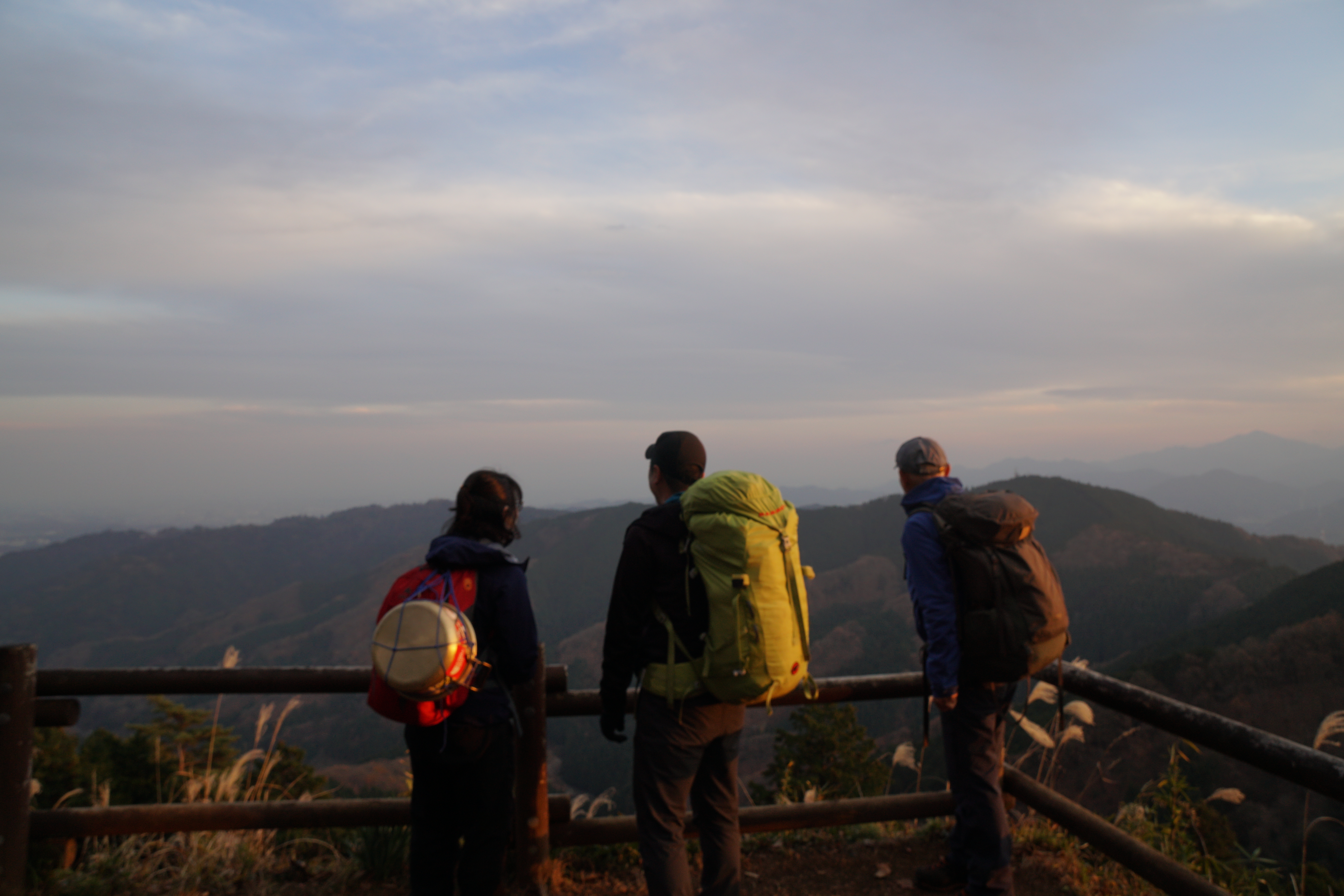
The first step was simply to spend more of our own time in the real-world field — the mountain — where the service is delivered. A small team of three, designers and a salesperson, began visiting Mt. TAKAO BASE CAMP at the foot of Mt. Takao on a regular schedule, working from the mountain side. That was the small first step.
Through staying there, we met hikers active in the area, trail runners, makers, the local shopping street and food and beverage operators, an architect, designers, museum curators, and more. We built a sense of the mountain side and made connections that became a foundation for everything that followed.
Pulled in by the appeal of Mt. Takao
During each stay we headed up the mountain often, talking with all kinds of hikers, gradually weaving time on the trail into our daily rhythm. Walking the many routes, we learned that, contrary to its image as a beginner-friendly mountain, Mt. Takao is also visited by intermediate and advanced hikers, and that it serves as an accessible training ground for trail runners. From observing flying squirrels on a night hike to paying our respects at Yakuoin — the heart of Mt. Takao's faith tradition — we found ourselves drawn deeper into the mountain's appeal.
Phase 2: Grounded Vision, Growing — Vision built from on-site practice
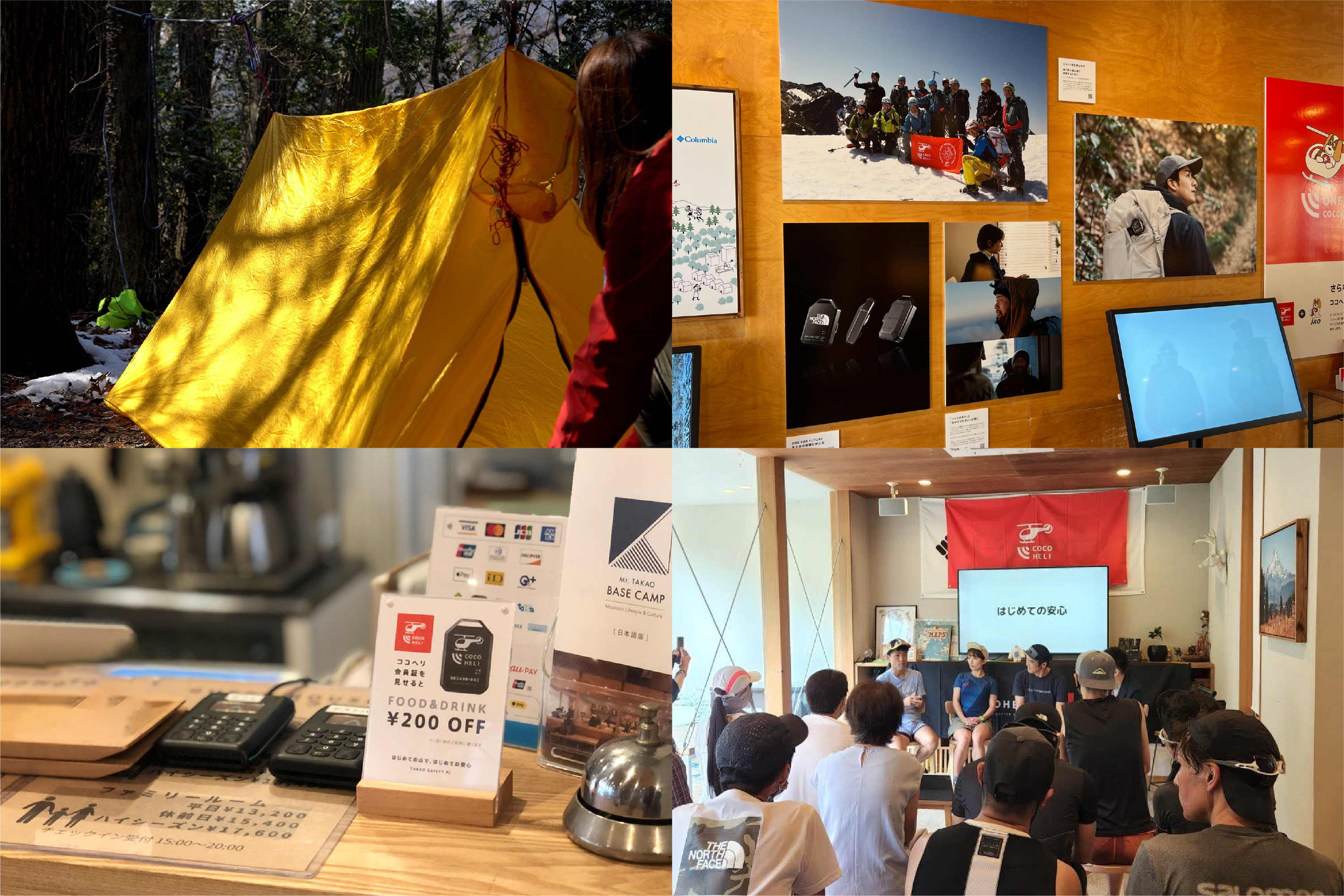
Building on the relationships that emerged in Phase 1, we began work to widen peace of mind in the mountains together with others. We named this thread the “TAKAO SAFETY PROJECT,” a body of activities meant to spark renewed thinking about safety. We produced videos that introduced tools to use in emergencies, ran talk events with hikers and trail runners based around Takao, planned night hikes to enjoy flying-squirrel watching with mountain guides, and supported a junior trail-running team — running a wide range of programs together with the local community.
As these real-world touchpoints accumulated, scenes where users, locals, and staff intersected gradually grew, and the circle of community centered on safety widened.
On your first mountain, your first peace of mind
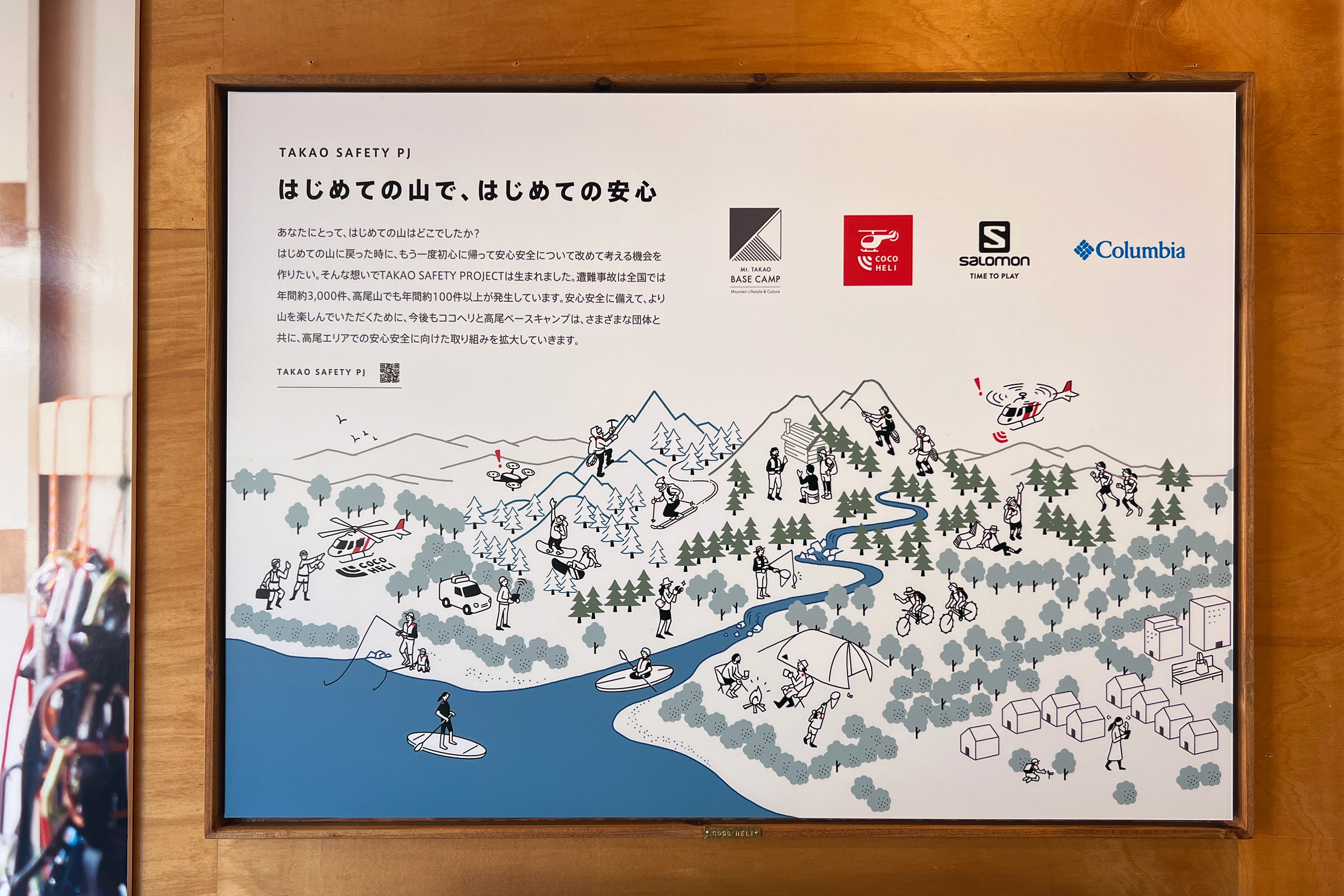
For many people, Mt. Takao is the very first mountain they ever climbed. When they came back, we wanted them to recall that mix of nervousness and excitement they felt heading to a first hike — and let that beginner's mind become the trigger for thinking about safety. With that intent, we created a vision map under the line “On your first mountain, your first peace of mind,” depicting everyone enjoying activities at Takao safely and securely. It became the project's guiding star. Rather than preparing a grand vision in classic backcasting fashion, the important point was to root ourselves in the user's field, run many small initiatives, and shape the vision together with collaborators along the way.
Phase 3: Community Prototyping — Standing up a community hub
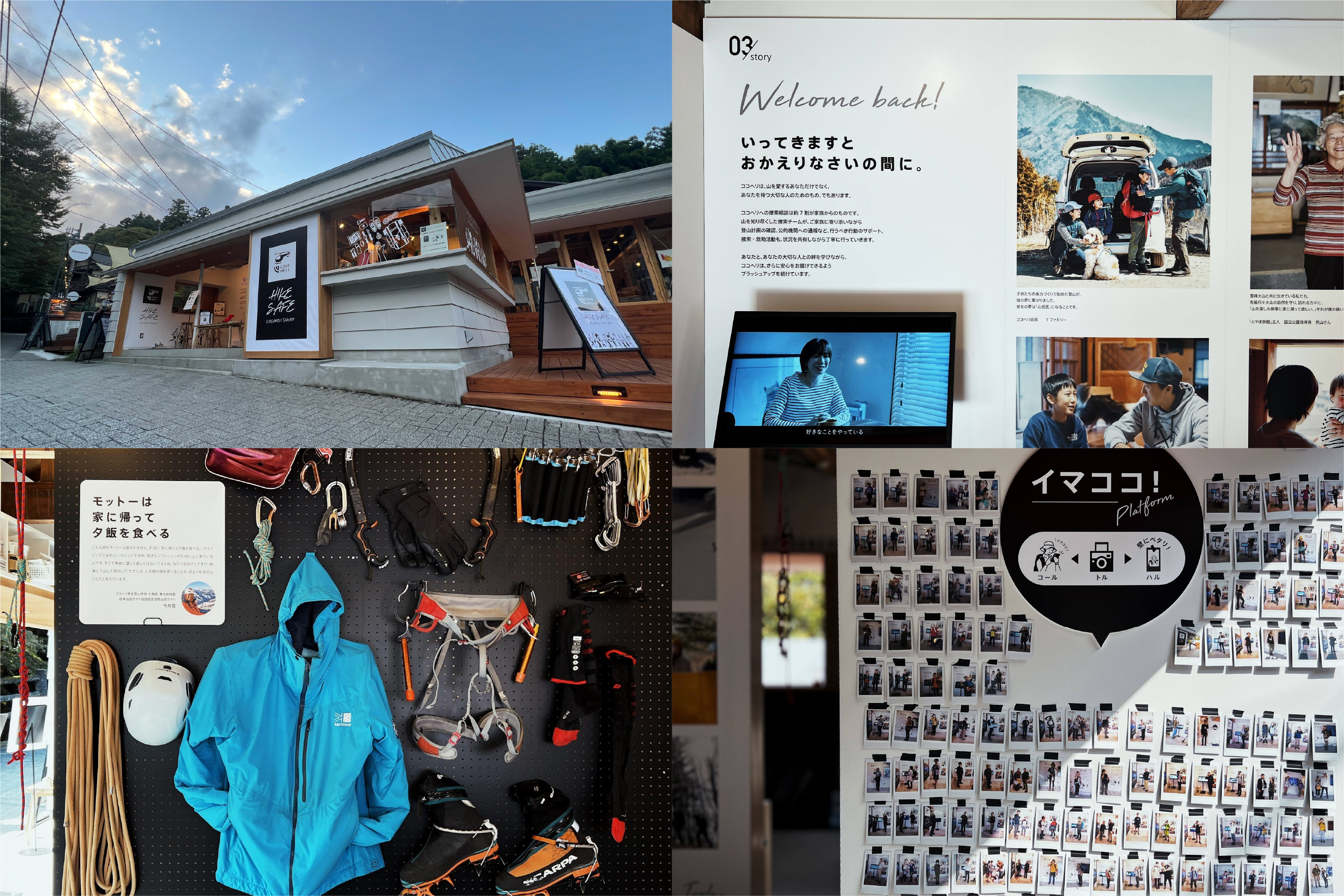
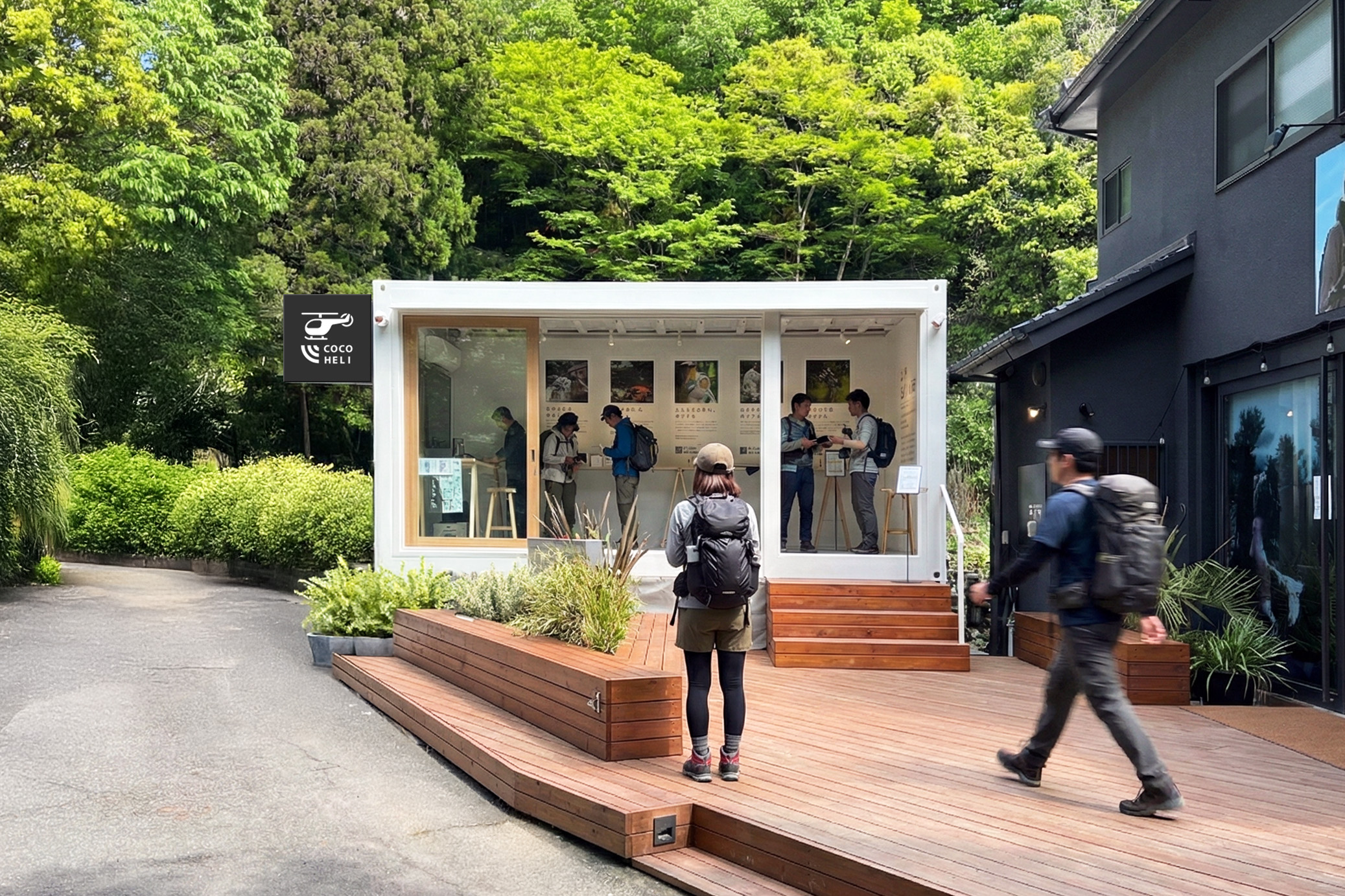
The relationships we built in Phases 1 and 2 led to an opportunity: we were able to use a property near a Mt. Takao trailhead for about two months. We named this place “COCOHELI TAKAO” — a space to connect directly with hikers — and treated it as a prototyping ground for the many ways one might build community. Rather than polishing every detail, we built things by hand, choosing rough-and-ready hands-on construction precisely so that prototyping stayed easy.
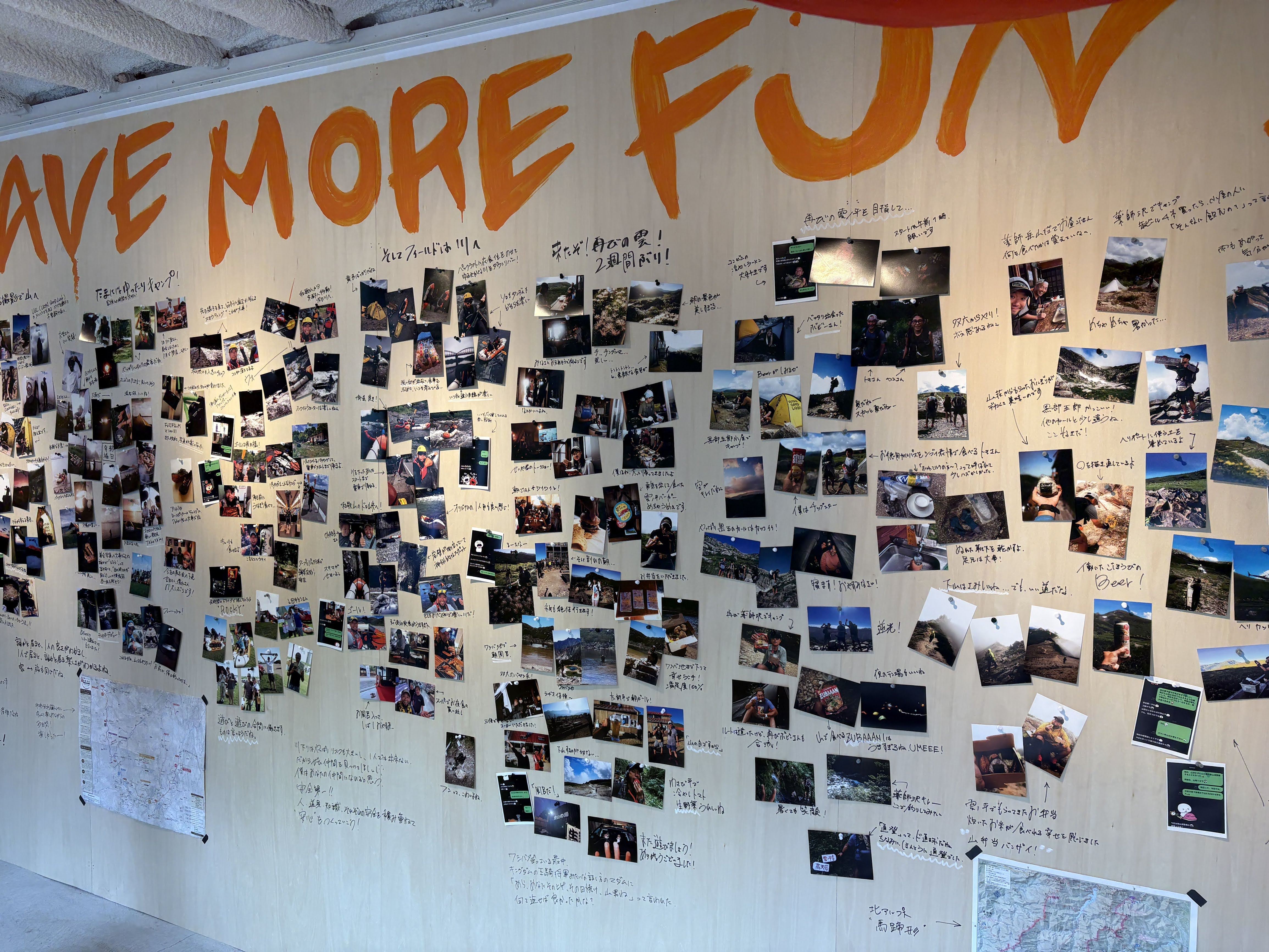
We planned and ran initiatives along four threads — aid, events, tools, and exhibits — all aimed at helping people feel the service's core value, the “circle of safety.” For a limited time we displayed well-worn tools used by mountain guides, ran a wall installation that stockpiled visitor photos, trialed tool rentals, and more. We also held a wide range of events, from Mt. Takao hikes and trail running to emergency-response themes.
Success as a community hub
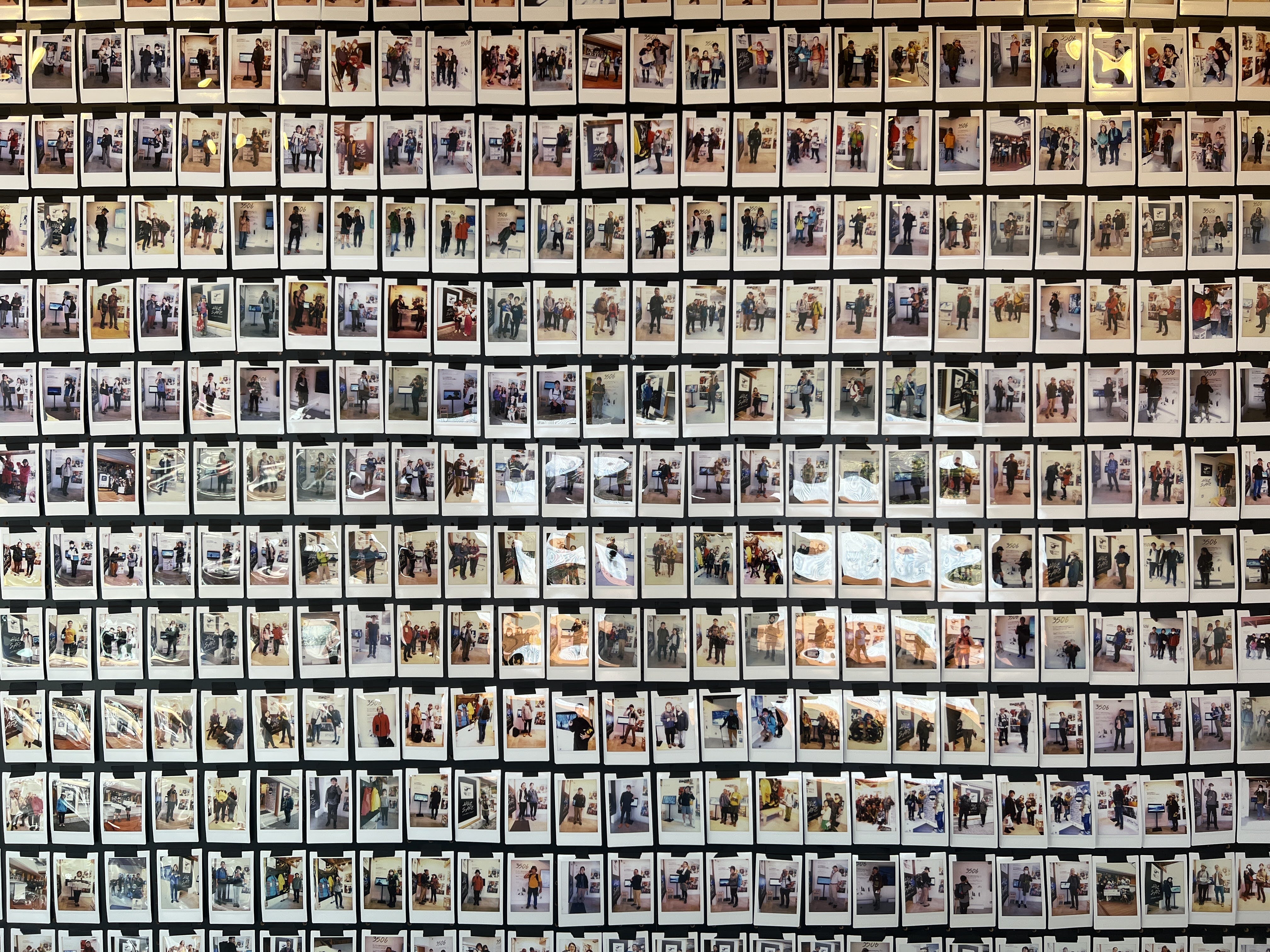
The various programs and events captured the interest of many hikers, drawing far more visitors than we had projected. In addition, even though we had deliberately left it out of our KPIs — not wanting to turn the place into a sales outpost — “new memberships originating from the hub” spread organically as visitors recommended the service to their friends, showing in concrete results that a community hub can be a powerful driver of business growth.
The photo shows “Imakoko,” an initiative implemented from an idea proposed by the marketing team. As a first step in thinking about safety, we asked users if we could photograph them as they were about to start the descent and let their families know. By the latter half of the run the wall was packed with photos, and many users came back repeatedly just to look for theirs.
Connecting employees with limited outdoor experience to the field
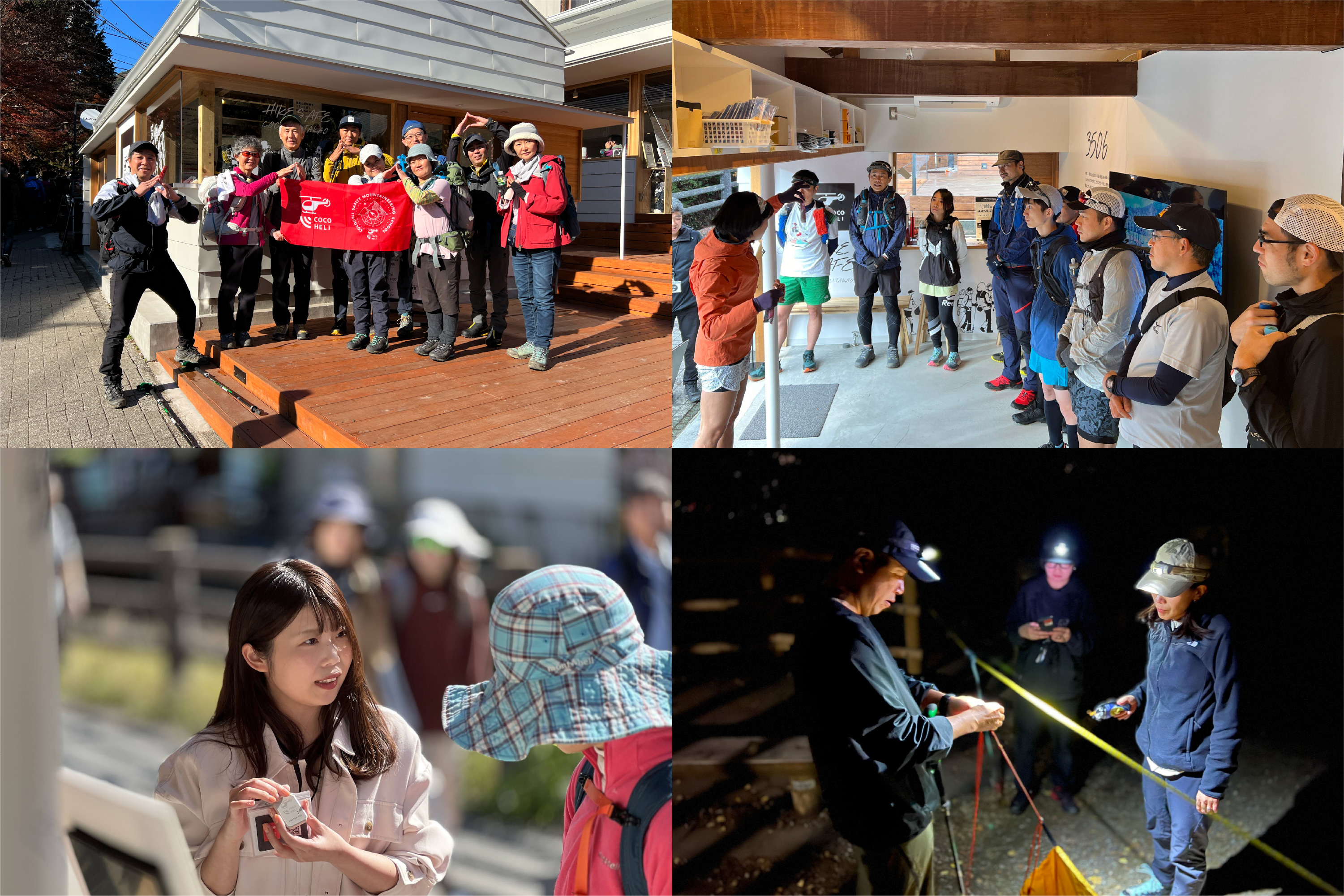
As an effort to deepen understanding of the operating field mentioned in the background, we announced the hub to the entire company. More than 80% of employees took part — not only sales but customer support, finance, SCM, and other back-office functions. Participants experienced both work shifts at the hub and a hike up Mt. Takao, deepening their understanding of the field that sits behind the service through both conversation and direct experience.
Satisfaction was especially high in the customer support team. Coming face-to-face with users they normally meet only by phone or email, employees said things like, “Reaching the summit and feeling that release, I realized our users go through this experience too,” and “Seeing so many smiles, I could honestly feel proud of the service we offer.”
New connections that emerged
We picked the hub manager from among the employees who had been involved continuously since Phase 1. Just two months may sound short, but the effect of having a place was substantial: new ties formed with local groups, public agencies, and manufacturers. Through the activity we also gained an opportunity to be offered space for a permanent location, walking away with a tangible sense of what came next.
Phase 4: Co-Creation Expansion — Growth as a place for co-creation
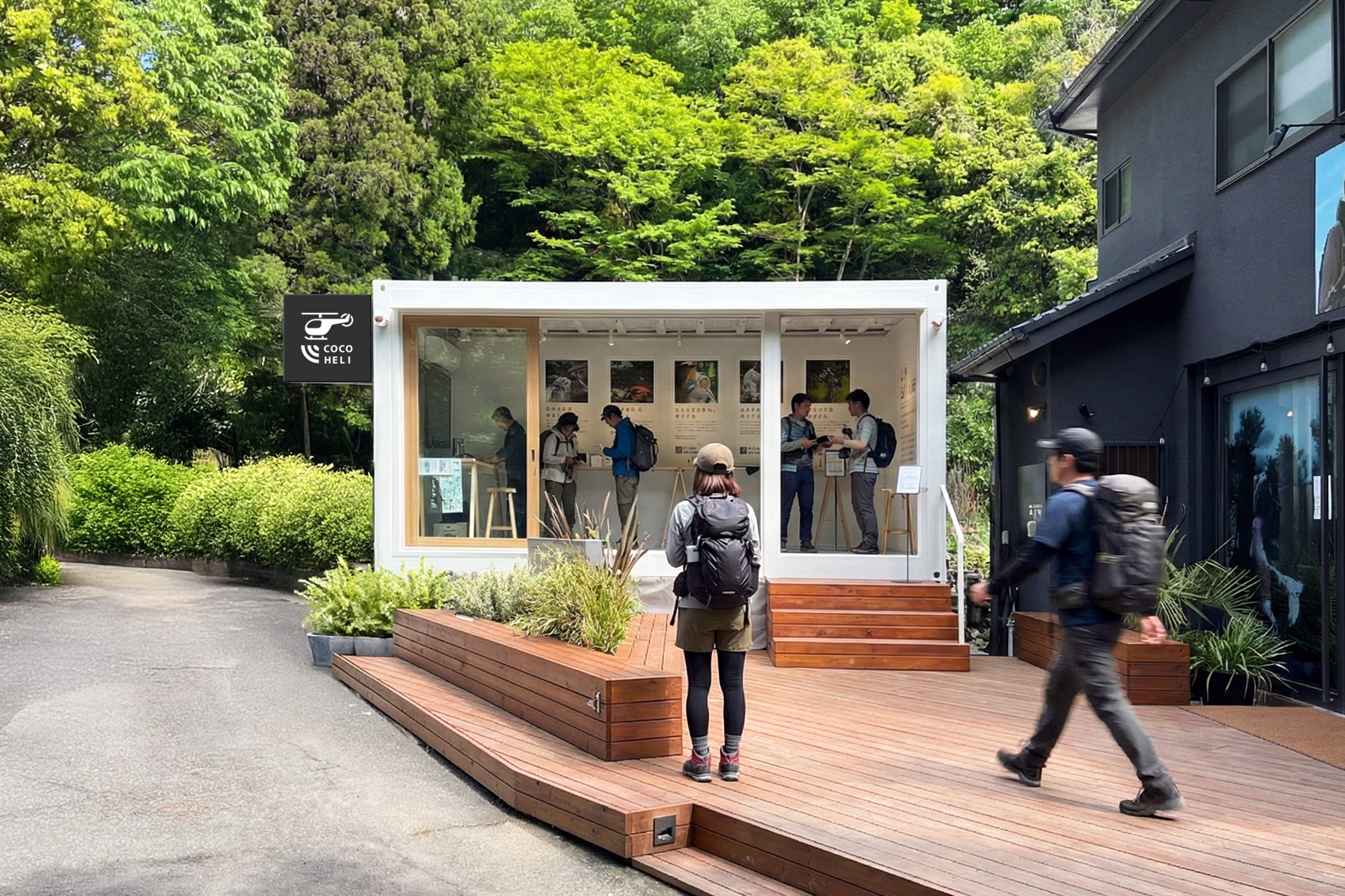
After the practice-based work in Phase 3, we relocated the community hub to a nearby space and shifted into ongoing operation as a permanent location. The structure also evolved — moving on from a model supported by internal volunteers, we placed dedicated staff. Building on the regional ties and the connections with mountain guides and collaborators we had cultivated, we put regular events and workshops on the calendar as a programmed offering.
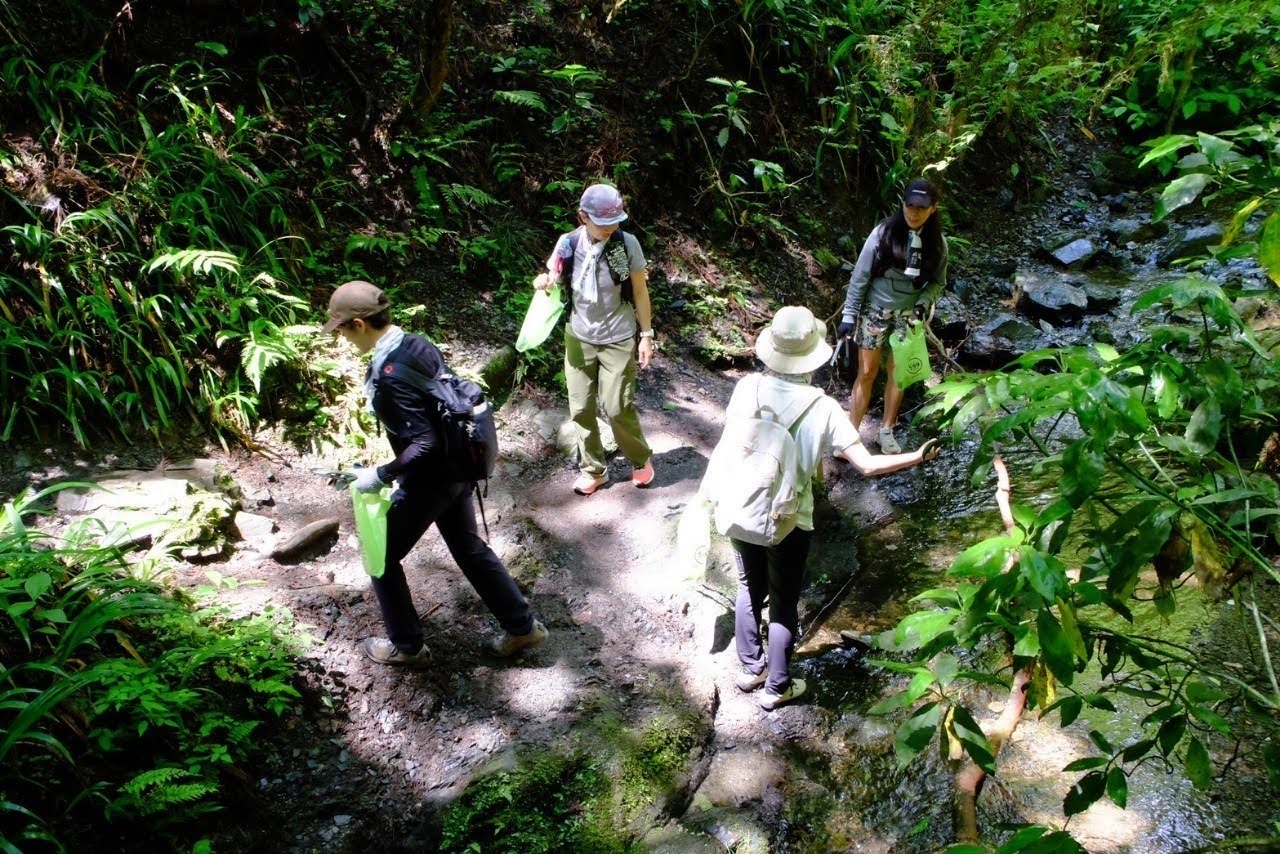
Expanding the hub's role through collaboration and research
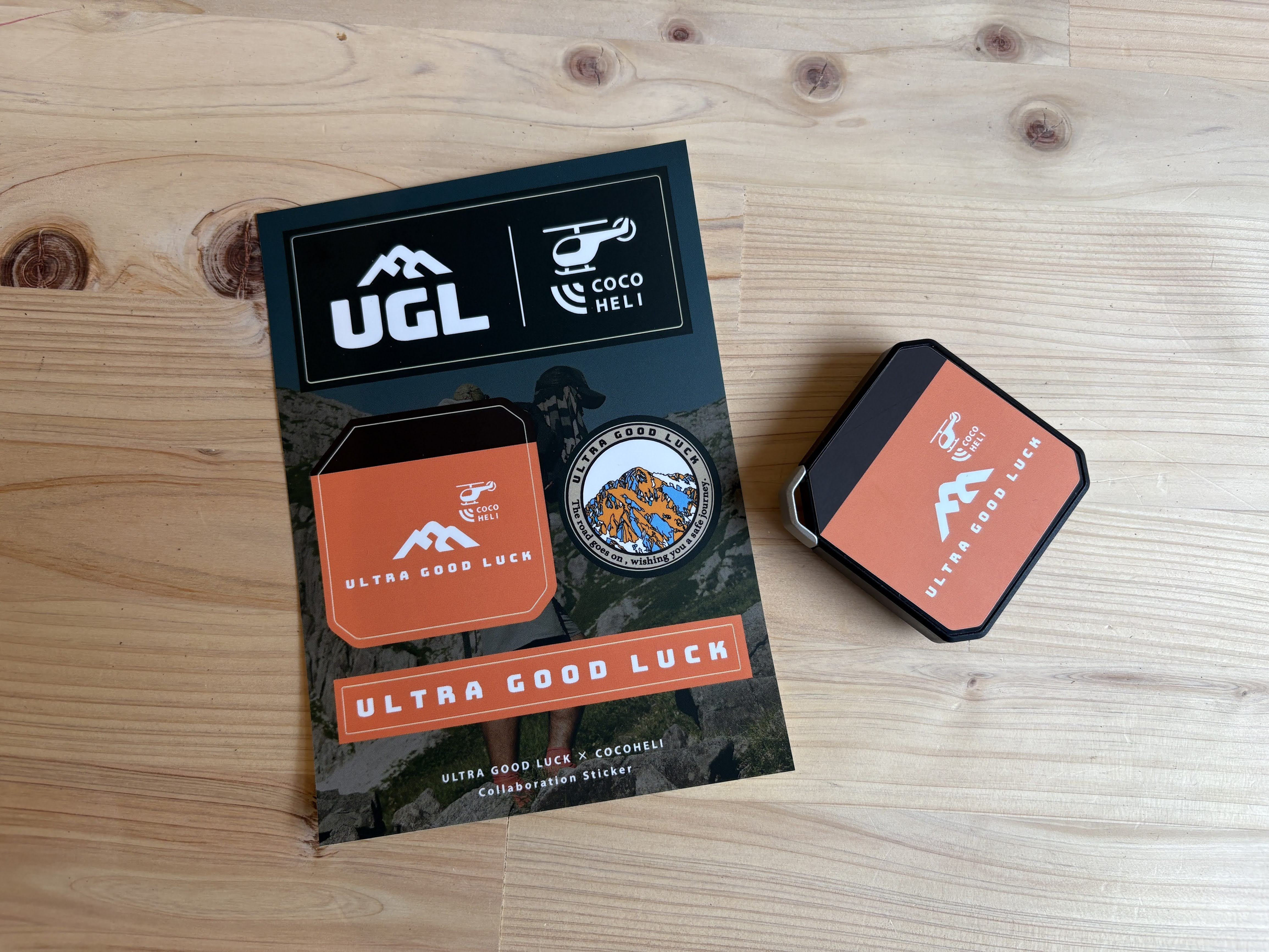
What had been in-house prototyping evolved into work that grew value through co-creation. Together with outdoor brands such as MILLET and ARC'TERYX, plus media outlets and SNS influencers, we produced exhibits and programs anchored in the shared theme of safety. For existing users this opened up new learning and reasons to participate, while at the same time widening contact with audiences who didn't yet know the service.
We also added a research function: capturing reactions, conversations, and noticed details from visitors and users in digital form, then organizing and sharing the content. Voices that emerge in real-world settings stopped being one-shot moments and were fed back into the service and the experience. The hub took on a stronger character as an operating base that combined co-creation with feedback collection.
Conclusion
5. The reach of community and business that real-world connection design supported
How can a digital service nurture real-world connection and widen its circle of empathy? This work was a steady accumulation of practice that grew while continuing to face that question.
Looked at along the timeline: it began in 2021 with Phase 1, “working from the mountain side,” spread step by step, and reached the standing-up of a community hub in Phase 3 in 2023. From there, through 2024 and 2025, the hub developed into a place for co-creation.
Looking back, when we started working from the mountain side, “it would be great if we could have a hub one day” was something we said almost as small talk; we hadn't drawn out specifics for what came next. Rather, it was because we didn't fix a clear goal — placing ourselves in the field and building relationships one at a time — that the hub stand-up and the community formation came about.
The effect of real-world connection on the company
In Phases 3 and 4, employees from across the company, including the back office, met users at the hub and experienced activities at Mt. Takao.
Participants said things like, “Reaching the summit and feeling that release, I realized our users go through this experience too,” and “Seeing so many smiles, I could honestly feel proud of the service we offer.”
In a startup, it's hard to avoid understanding of the operating field thinning as the organization grows. The experience at the hub planted a perspective that imagines users' time and feelings, and gave employees a chance to re-grasp, in their hands, what their work connects to. The fact that small shifts in awareness like this happened at all is, I believe, where the value of this work lies.
What real-world connection design brought to business growth
Through the activity at the hub, what struck me was how often empathy called to empathy and people naturally connected other people. In Phase 3, we deliberately did not foreground sales pitches, yet the hub still triggered new memberships, and many users who became fans went on to recommend the service to others.
Through that experience I came to feel concretely that relationships and trust nurtured in real-world places quietly shape not only the spread of community but also the improvement and growth of the service itself. A small accumulation of practice can, in time, produce a much larger circulation. That process was itself one of the most important things this work taught me.